
Biography
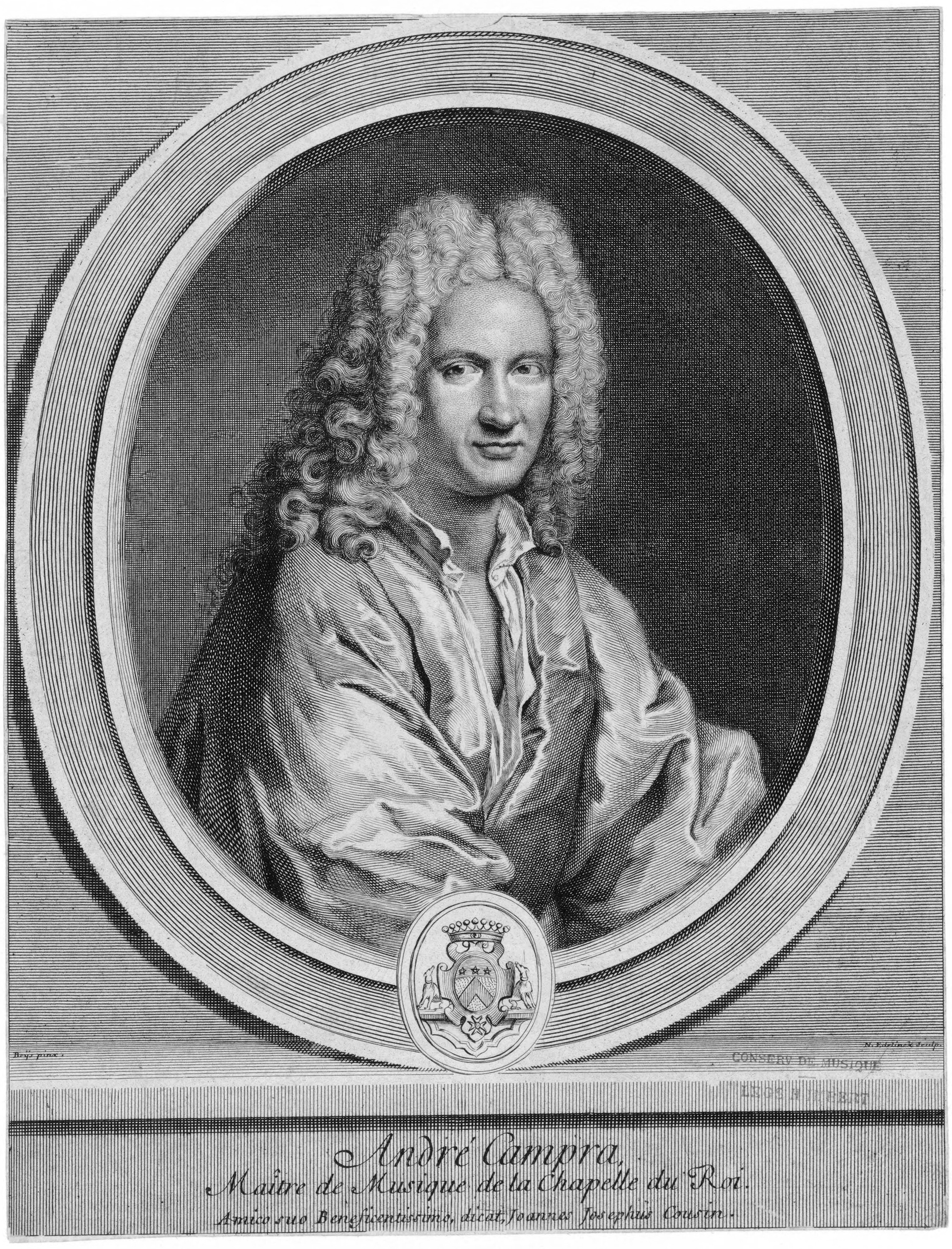
WikipediaAndré Campra was a French composer and conductor of the Baroque era. The leading French opera composer in the period between Jean-Baptiste Lully and Jean-Philippe Rameau, Campra wrote several tragédies en musique and opéra-ballets that were extremely well received. He also wrote three books of cantatas as well as religious music, including a requiem. Biography
Campra was the son of Giovanni Francesco Campra, a surgeon and violinist from Graglia, Italy, and Louise Fabry, from Aix-en-Provence. His father was his first music teacher. He was baptised on 4 December 1660 in the Église de la Madeleine in Aix. He became a choirboy in the Cathédrale Saint-Sauveur there in 1674 and commenced ecclesiastical studies four years later. He was reprimanded by his superiors in 1681 for having taken part in theatrical performances without permission, but was nevertheless made a chaplain on 27 May of that year.
He served as maître de musique (music director) at the cathedrals of Arles and Toulouse and then, from 1694 to 1700, served in a similar capacity at the cathedral of Notre-Dame de Paris. André Campra introduced violins into the performance of sacred music at the Cathedral of Paris, an innovation that proved controversial at a time when the instrument was still associated with popular street music. In 1697 he began composing for the theatre, initially publishing some works under his brother’s name in order to safeguard his reputation with ecclesiastical authorities. He resigned his position at Notre-Dame in 1700 and thereafter devoted himself to theatrical composition, achieving considerable critical success. By 1705 he had attained such prominence as a composer that he became the subject of hostile commentary in the press. From 1720 onward, he restricted his activity to the composition of sacred music.
Although Campra had obtained critical success he lacked financial security. In 1722 he was engaged briefly as maître de musique by the Prince of Conti.
Works & Events
1660
Birth of André Campra
birth
Derived from Wikidata date of birth (P569).
1697
Premiere of L'Europe galante (André Campra)
premiere
Derived from Wikidata date of first performance (P1191).
1704
Premiere of Télémaque, ou Les fragments des modernes (André Campra)
premiereParis Opera
Derived from Wikidata date of first performance (P1191).
1704
Premiere of Iphigénie en Tauride (André Campra)
premiereParis Opera
Derived from Wikidata date of first performance (P1191).
1705
Premiere of Alcine (André Campra)
premiere
Derived from Wikidata date of first performance (P1191).
1708
Premiere of Hippodamie (André Campra)
premiereParis Opera
Derived from Wikidata date of first performance (P1191).
1710
Premiere of Les fêtes vénitiennes (André Campra)
premiereParis Opera
Derived from Wikidata date of first performance (P1191).
1712
Premiere of Idoménée (André Campra)
premiereParis Opera
Derived from Wikidata date of first performance (P1191).
1713
Premiere of Télèphe (André Campra)
premiereParis Opera
Derived from Wikidata date of first performance (P1191).
1735
Premiere of Achille et Déidamie (André Campra)
premiereParis Opera
Derived from Wikidata date of first performance (P1191).
1744
Death of André Campra
death
Derived from Wikidata date of death (P570).
2011
Premiere of The Enchanted Island (Jean-Philippe Rameau)
premiere
Derived from Wikidata date of first performance (P1191).
Gallery(3)





Are you a musician? Join Cadenza for free